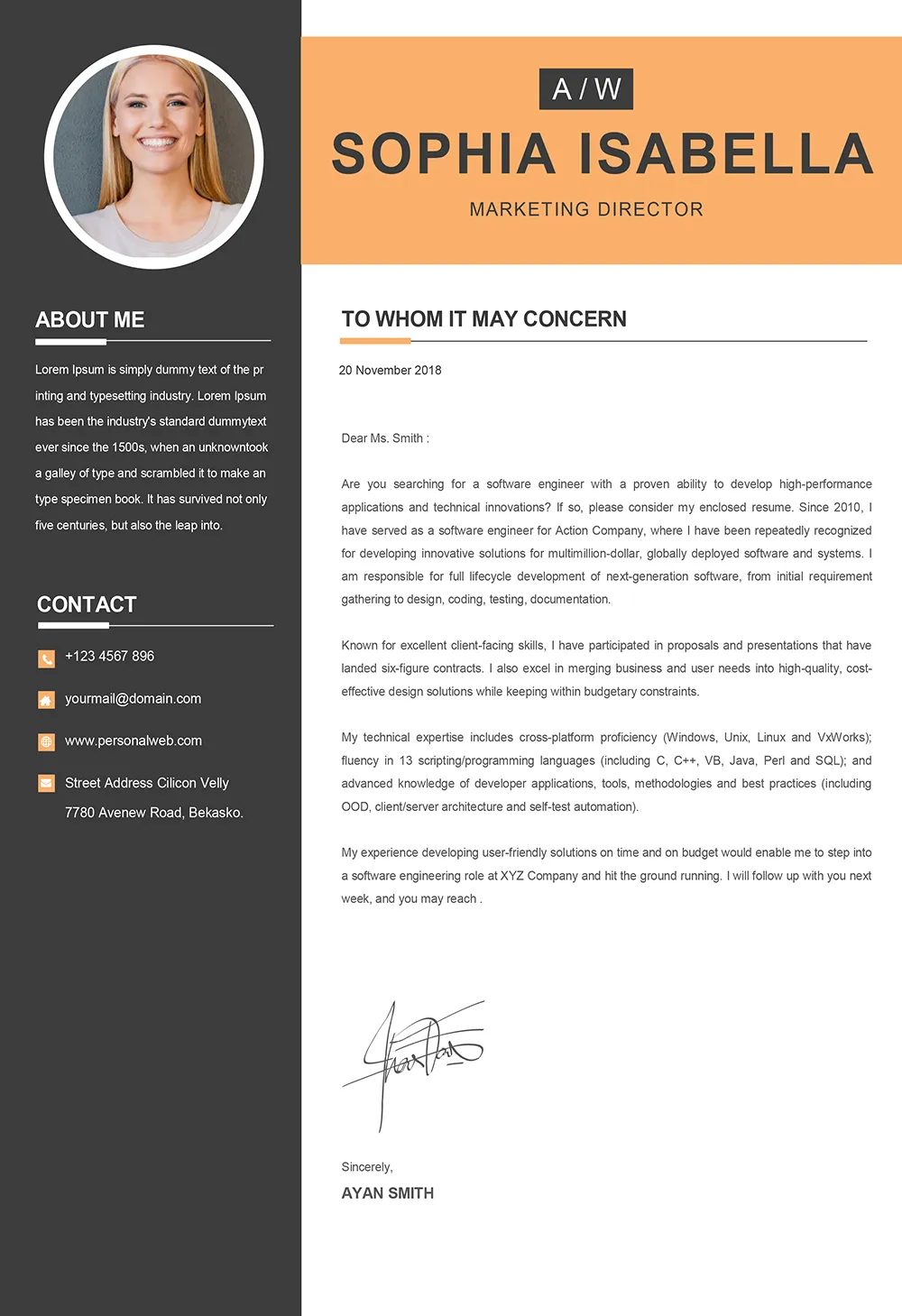
What is a Cover Letter for CV
A cover letter is a crucial document that accompanies your Curriculum Vitae (CV) or resume when applying for a job. It serves as your personal introduction to the hiring manager, allowing you to expand on the information presented in your CV and showcase your personality, skills, and qualifications in a compelling way. Unlike your CV, which provides a factual overview of your experience and education, the cover letter allows you to tell a story, articulating why you’re the ideal candidate for the specific role. It is your opportunity to make a strong first impression and persuade the employer to read your CV more closely.
Purpose of a Cover Letter for CV
The primary purpose of a cover letter is to grab the hiring manager’s attention and encourage them to review your CV. It provides context for your application, connecting your skills and experience to the job requirements. Furthermore, a well-written cover letter demonstrates your communication skills, professionalism, and genuine interest in the position and the company. It allows you to highlight relevant achievements, explain any gaps in your employment history, and express your enthusiasm for the opportunity. Essentially, it’s your chance to convince the employer that you are not only qualified but also a great fit for their organization.
Key Components of a Cover Letter for CV

A strong cover letter comprises several key components that work together to create a persuasive narrative. Each section plays a vital role in conveying your message effectively and making a positive impression on the hiring manager. Structuring your cover letter with these components in mind ensures you present a well-organized and compelling argument for why you are the best candidate for the job.
Header and Contact Information
Begin your cover letter with a professional header that includes your contact information, such as your name, phone number, email address, and optionally, your LinkedIn profile URL. Also, include the date and the hiring manager’s name and title, if known, and the company’s address. Ensure your contact information is accurate and up-to-date. A clean, well-formatted header sets a professional tone and makes it easy for the recruiter to contact you if they are interested in your application.
Greeting the Hiring Manager
Address the hiring manager by name whenever possible. Researching the hiring manager’s name is a worthwhile investment of time. If you can’t find the hiring manager’s name, use a professional salutation such as “Dear Hiring Manager” or “Dear [Department] Team”. Avoid generic greetings like “To Whom It May Concern,” which can make your letter feel impersonal. A personalized greeting shows that you have taken the time to research the company and the specific job opportunity.
Body Paragraphs

The body of your cover letter is where you make your case for the job. This section should be concise, well-organized, and compelling. Aim for three or four paragraphs to effectively communicate your qualifications and interest in the role. Each paragraph should have a clear focus, such as why you’re applying, your relevant skills, and your enthusiasm for the company.
First Paragraph Why You’re Applying
Start by stating the position you are applying for and how you learned about the opportunity. Briefly mention why you are interested in the job and the company. This paragraph should immediately capture the reader’s attention and provide a clear reason for your application. Expressing your enthusiasm for the role and the company sets a positive tone and encourages the hiring manager to continue reading.
Second Paragraph Highlighting Your Skills and Experience
In this paragraph, highlight your most relevant skills and experiences that align with the job requirements. Focus on specific achievements and provide concrete examples of how you have demonstrated these skills in past roles. Quantify your accomplishments whenever possible by using numbers and data to showcase your impact. This section should demonstrate how your abilities directly benefit the company and make you a strong candidate.
Third Paragraph Expressing Enthusiasm and Fit

Showcase your genuine interest in the company and the role. Explain why you are a good fit for the company culture and what you hope to achieve in the position. Mention specific aspects of the company that resonate with you, such as its mission, values, or recent projects. Connect your personal goals with the company’s objectives to demonstrate your long-term commitment and enthusiasm.
Closing Paragraph and Call to Action
Conclude your cover letter with a strong closing paragraph that summarizes your key qualifications and reiterates your interest in the position. Include a call to action, such as expressing your eagerness to discuss your application further in an interview. Thank the hiring manager for their time and consideration, and end with a professional closing, such as “Sincerely” or “Best regards,” followed by your name.
Formatting and Style of a Cover Letter for CV
The formatting and style of your cover letter are essential for making a positive impression. A well-formatted cover letter is easy to read, visually appealing, and demonstrates your attention to detail. Pay close attention to font choices, spacing, and overall presentation.
Font and Readability

Choose a professional and easy-to-read font, such as Times New Roman, Arial, Calibri, or Georgia. Use a font size between 10 and 12 points. Ensure adequate spacing between lines and paragraphs to enhance readability. Avoid using excessive bolding, italics, or underlining, which can make your letter appear cluttered.
Length and Tone
Keep your cover letter concise and focused. Aim for a length of one page, or approximately 250-400 words. Maintain a professional and enthusiastic tone throughout. Use clear, concise language and avoid jargon or overly complex sentences. Your tone should reflect your personality while still maintaining professionalism.
Proofreading and Editing
Thoroughly proofread and edit your cover letter before submitting it. Check for any grammatical errors, spelling mistakes, or punctuation issues. Ensure the content flows logically and that your message is clear and compelling. Consider asking a friend, family member, or career counselor to review your cover letter for feedback.
Common Mistakes to Avoid in a Cover Letter for CV

Avoid these common pitfalls to ensure your cover letter makes a positive impact and increases your chances of getting an interview. Paying attention to detail and avoiding these errors can significantly improve your application.
Generic Content
Do not use generic cover letters. Tailor each letter to the specific job and company. Customize your letter to showcase how your skills and experiences align with the job requirements. Generic content demonstrates a lack of interest and reduces your chances of standing out.
Typos and Grammatical Errors
Carelessly making typos and grammatical errors can undermine your credibility. Proofread your cover letter carefully and use spell-check and grammar-check tools. Always ask someone else to review your letter for mistakes you may have missed.
Ignoring the Job Description

Read the job description closely and address the specific requirements. Highlight how your skills and experiences meet the criteria outlined in the job posting. Failure to address the key requirements demonstrates a lack of attention to detail and reduces your chances of being selected for an interview.
Tailoring Your Cover Letter for CV
Tailoring your cover letter is crucial for making a strong impression and demonstrating your genuine interest in the job and the company. This involves research, careful analysis, and customizing your letter to showcase how your skills and experience align with the specific job requirements.
Researching the Company
Before you start writing, research the company to understand its mission, values, and recent projects. Visit their website, review their social media profiles, and read news articles about the company. Showing that you’ve done your homework demonstrates your genuine interest in the company and helps you tailor your cover letter to their specific needs.
Matching Skills to Requirements
Carefully review the job description and identify the key skills and qualifications the employer is seeking. Highlight your relevant skills and experiences that align with these requirements. Provide specific examples of how you have demonstrated these skills in past roles. This demonstrates that you understand what the employer is looking for and that you possess the necessary abilities to succeed.
Including Keywords
Incorporate relevant keywords from the job description into your cover letter. Applicant Tracking Systems (ATS) often scan cover letters for keywords to determine if a candidate meets the required qualifications. While it’s important to include keywords, make sure your writing remains natural and avoids keyword stuffing. The goal is to make your letter both ATS-friendly and engaging for the hiring manager.
Cover Letter for CV Examples and Templates
Leverage examples and templates to guide your cover letter writing process. These resources can help you understand the structure, format, and content of effective cover letters. However, always customize the examples and templates to reflect your unique skills, experiences, and the specific job requirements.
Where to Find Examples
Numerous online resources offer cover letter examples. Websites like Indeed, LinkedIn, and The Muse provide various samples tailored to different industries and job titles. Use these examples as a starting point and adapt them to reflect your background and the specific job you are applying for. Also, career websites offer templates and samples of cover letters that can provide guidance.
Using Templates Effectively
When using cover letter templates, customize them to fit your individual circumstances. Do not simply copy and paste the template content. Tailor the content to highlight your relevant skills, experiences, and achievements. Customize the language and style to match your personality and the specific requirements of the job. Replace placeholder text with your own details and achievements, making the template truly your own.
Finalizing and Submitting Your Cover Letter for CV
Before submitting your cover letter, take the time to finalize it and ensure it is error-free. Pay attention to the details, proofread thoroughly, and submit your application in the correct format.
Finalizing and Submitting Your Cover Letter for CV
Ensure your cover letter is in the correct format requested by the employer. Usually, this means saving the document as a PDF to preserve the formatting. Double-check that your contact information is accurate and up-to-date. After proofreading the content, read the entire cover letter one last time to verify that everything is correct, well-written, and aligned with the job requirements.