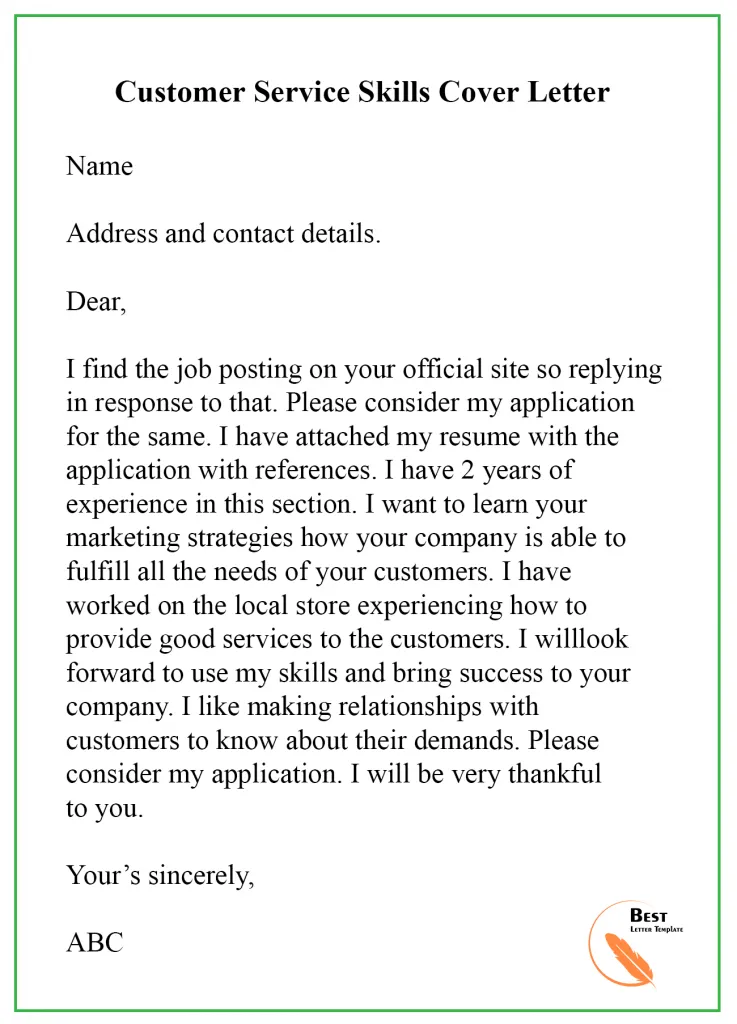
Why a Strong Customer Service Cover Letter Matters
In the competitive landscape of job applications, a well-crafted customer service cover letter can be the key to unlocking your dream role. It’s more than just a formality; it’s your first opportunity to make a lasting impression on potential employers. A strong cover letter serves as your personal introduction, showcasing your personality, skills, and enthusiasm for the position. It allows you to go beyond your resume and provide a narrative that highlights your relevant experiences and qualifications in a way that resonates with the hiring manager. Think of it as your chance to make the case for why you’re the ideal candidate, demonstrating how your unique abilities align with the company’s needs. A compelling cover letter is essential for setting you apart from other applicants and significantly increasing your chances of securing an interview. Neglecting this crucial step could mean missing out on opportunities to demonstrate your genuine interest and value to the organization. Consider it your personal sales pitch, designed to persuade the employer that you are the perfect fit for their customer service team. This is your chance to shine and make a memorable first impression.
Key Components of a Winning Customer Service Cover Letter
Creating a winning customer service cover letter involves several key elements, each playing a crucial role in capturing the hiring manager’s attention. The structure should be clear, concise, and easy to read, allowing the reader to quickly grasp your qualifications and enthusiasm. A successful cover letter begins with a professional header that includes your contact information and the date, ensuring the recruiter can easily reach you. Following this, address the hiring manager directly, if possible, using their name to show you’ve done your research and taken the time to personalize your application. The opening paragraph should be compelling, immediately grabbing the reader’s attention with a strong statement of interest and a brief overview of your relevant skills. The body of the letter is where you delve into your qualifications, emphasizing skills and experiences that align with the job description. Conclude with a strong closing, reiterating your interest and expressing your eagerness for an interview. Each section must work cohesively to present a comprehensive view of your capabilities and desire for the role.
Your Contact Information & the Date

The header of your customer service cover letter sets the foundation for a professional presentation. Begin by including your full name, followed by your phone number and email address. Ensure the email address is professional and appropriate for a job application. Next, add the current date directly below your contact information. This confirms the letter’s recency and provides a chronological reference. Correct formatting is crucial for clarity; use a clean and legible font, such as Arial or Times New Roman, and maintain consistent spacing. This header is the initial point of contact, so it must be clear, easily accessible, and error-free. By providing this information accurately, you enable potential employers to reach out to you quickly and efficiently, making it easier for them to consider your application for the customer service position. A well-formatted header shows attention to detail, which is a fundamental quality in customer service roles.
The Hiring Manager’s Information
Following your contact information and the date, address the hiring manager directly. Start with their full name and title, if available. If you can’t find a specific name, use a general salutation like ‘Dear Hiring Manager,’ but always try to personalize your approach by researching the company’s website or LinkedIn to find the name of the person responsible for hiring. Addressing the hiring manager directly shows that you’ve taken the initiative to learn about the company and the role, which will immediately grab their attention. Avoid generic greetings if possible. If the name is unknown, ensure the general greeting is followed by a polite and respectful tone. This personalization demonstrates your keenness and professionalism, setting a more positive tone for the rest of your letter. Taking the time to address the hiring manager directly can significantly enhance your chances of creating a positive first impression and making your cover letter stand out from the crowd.
A Compelling Opening: Grab Their Attention
The opening paragraph is your opportunity to make a memorable first impression. Start with a strong hook that immediately captures the reader’s attention. You can express your enthusiasm for the role, highlight a relevant achievement, or mention something specific about the company that resonates with you. For example, you might mention your passion for customer service or reference a recent company initiative that aligns with your values. Avoid generic phrases like ‘I am writing to express my interest…’ Instead, aim to be concise, enthusiastic, and directly state your purpose. Clearly state the position you are applying for and how you learned about the opportunity. This demonstrates your awareness and proactive approach. Aim to create a sense of intrigue and invite the reader to learn more about your qualifications. The opening is your most crucial opportunity to make a positive impression and encourage the hiring manager to continue reading.
Highlighting Your Customer Service Skills

In the body of your customer service cover letter, the focus should be on showcasing your most relevant skills and experiences. Carefully review the job description and identify the key skills the employer is seeking. Then, provide specific examples from your past experiences that demonstrate how you have successfully applied these skills in real-world situations. Use the STAR method (Situation, Task, Action, Result) to structure your examples, providing a clear narrative of how you handled customer interactions, solved problems, or exceeded expectations. Quantify your achievements whenever possible; for example, instead of saying ‘improved customer satisfaction,’ say ‘increased customer satisfaction scores by 15% through proactive communication.’ This approach provides concrete evidence of your capabilities and allows the hiring manager to easily assess your value. The goal is to make a compelling case for why you are the perfect fit for the role, demonstrating your ability to meet and exceed the company’s expectations.
Communication Skills
Communication skills are critical in customer service roles. Highlight your ability to communicate clearly and effectively, both verbally and in writing. Provide examples of how you’ve successfully communicated complex information in a way that customers could easily understand. Mention your ability to listen actively, ask clarifying questions, and tailor your communication style to different audiences. Demonstrate your proficiency in various communication channels, such as email, phone, and chat. Emphasize your ability to remain calm and professional, even in challenging situations. Illustrate specific instances where your strong communication skills resulted in positive outcomes, such as improved customer satisfaction, reduced complaints, or increased sales. These examples showcase your interpersonal skills, which are essential in building rapport and trust with customers. It demonstrates the core skill of effective communication in a customer service setting.
Problem-Solving Abilities
Customer service professionals must be adept at problem-solving. Showcase your ability to quickly assess customer issues, identify the root cause, and implement effective solutions. Describe instances where you have used critical thinking to troubleshoot problems or resolve complaints. Include any specific methodologies or tools you’ve used to analyze and solve problems, such as data analysis or CRM systems. Quantify your impact by mentioning how you have reduced resolution times, improved first-call resolution rates, or decreased customer escalations. Show that you are proactive in finding solutions, seeking feedback, and making process improvements. The capacity to solve problems shows you can handle difficult customer inquiries and maintain efficiency within the company. These examples highlight your ability to efficiently and effectively handle and address problems.
Empathy and Patience

Empathy and patience are essential attributes for customer service roles. Demonstrate your ability to understand and respond to customers’ emotional needs. Provide examples of situations where you have actively listened to a customer’s concerns and provided compassionate support. Show how you remain patient and calm, even when dealing with difficult or frustrated customers. Mention any training or experience you have in conflict resolution or de-escalation techniques. Highlight how your empathy has resulted in positive outcomes, such as improved customer loyalty or reduced negative feedback. Include specific instances that illustrate your ability to build rapport and create a positive experience for the customer. These are crucial in fostering positive customer relationships.
Teamwork and Collaboration
Customer service often involves teamwork and collaboration. Showcase your ability to work effectively with colleagues to achieve common goals. Provide examples of how you’ve collaborated with other team members to resolve complex customer issues. Mention your participation in team projects or your contributions to a positive team environment. Highlight instances where you’ve shared your knowledge or provided support to colleagues. Emphasize your willingness to receive feedback and learn from others. Demonstrate your ability to communicate effectively within a team and contribute to a supportive and productive work environment. Teamwork highlights your ability to work in harmony with others in the workplace and share knowledge, supporting the group to achieve the common goal of excellent customer service.
Showcasing Your Relevant Experience
Highlighting your relevant experience is crucial. Focus on your customer service-related roles, internships, or volunteer experiences. Briefly describe your responsibilities and accomplishments in each role. If you’re an entry-level applicant, emphasize any transferable skills from other roles, such as communication, problem-solving, or organizational skills. Frame your experience using the STAR method, providing context, the task, the action taken, and the results achieved. Mention any specific tools or systems you are familiar with, such as CRM software or help desk platforms. Quantify your accomplishments whenever possible; use metrics to demonstrate the impact you had in previous roles. By providing a concise, compelling narrative of your professional background, you demonstrate your capability and potential to the employer. Your prior work experience can demonstrate your past performance and provide reassurance that you will provide great results for the role.
Quantify Your Achievements

Quantifying your achievements is a powerful way to demonstrate your value to the hiring manager. Instead of general statements, provide specific numbers and metrics to illustrate your impact in previous roles. For example, instead of saying ‘Improved customer satisfaction,’ say ‘Increased customer satisfaction scores by 15% within six months.’ Or, instead of saying ‘Handled a high volume of calls,’ say ‘Managed an average of 75 calls per day with a 95% first-call resolution rate.’ Use data to showcase your accomplishments, such as reduced resolution times, decreased customer complaints, or increased sales. When possible, include percentages, dollar amounts, or other measurable outcomes. This approach gives concrete evidence of your abilities and allows the hiring manager to easily assess your value. Quantifiable data offers tangible proof of your performance and reinforces your claims with real-world results, making your application much more convincing.
Tailoring Your Letter to the Job Description
Customizing your cover letter to each specific job description is a critical step in the application process. Review the job description carefully, paying attention to the keywords and required skills. Identify the skills and experiences the employer is looking for, and align your letter accordingly. Use the same language and terminology as the job description whenever possible, ensuring your application reflects what the company is seeking. Customize your examples to directly address the job’s requirements. For example, if the job description emphasizes experience with a particular software system, make sure to mention your proficiency with that system. Highlighting the key responsibilities listed in the job description shows that you understand the position and have the skills to excel. Tailoring your cover letter demonstrates your genuine interest in the specific opportunity and your attention to detail.
Closing Your Customer Service Cover Letter Effectively
The closing paragraph of your cover letter is your final opportunity to leave a positive impression. Reiterate your interest in the position and your enthusiasm for the company. Express your gratitude for the hiring manager’s time and consideration. Clearly state your intention to follow up or your availability for an interview. Close with a professional sign-off, such as ‘Sincerely’ or ‘Best regards.’ Provide your contact information once more, to make it easy for them to reach you. Avoid generic phrases; make your closing concise, focused, and enthusiastic. The goal is to reinforce your desire for the role and leave the hiring manager with a lasting positive impression. A well-crafted closing ensures you end on a high note, increasing your chances of moving forward in the hiring process. This conclusion solidifies your interest and invites the hiring manager to contact you.
Proofread and Edit Your Cover Letter

Before submitting your customer service cover letter, it is essential to proofread and edit it meticulously. Errors in grammar, spelling, or punctuation can undermine your credibility and diminish your chances of getting hired. Read your letter multiple times, looking for any mistakes. Use a spell-checker, but don’t rely on it entirely; it won’t catch all errors. Ask a friend or family member to review your letter for a fresh perspective. Ensure your letter is clear, concise, and well-organized. Check the formatting to ensure it is consistent and professional. Verify that all your contact information is correct. Take the time to make certain that your cover letter is free of any errors or typos before you submit it. The attention to detail demonstrated in a polished cover letter reflects your professionalism and attention to detail, which are essential attributes for customer service roles. A well-edited letter leaves a positive impression, significantly increasing your chances of success.