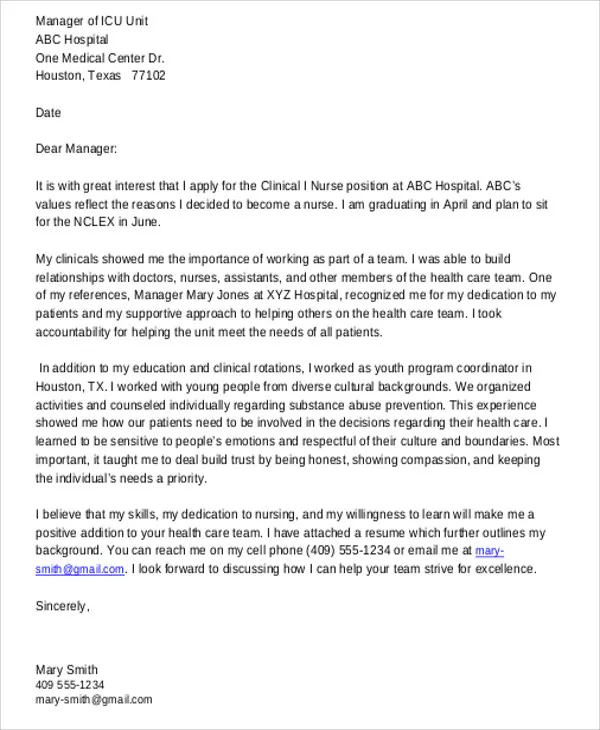
Transitioning from a Med-Surg nursing role to the Intensive Care Unit (ICU) is a significant career move, and a well-crafted cover letter is crucial in making this happen. Your cover letter is your first impression, a chance to showcase your skills and passion for critical care. This guide provides a comprehensive framework to write a compelling ICU nurse cover letter that highlights your experience, demonstrates your knowledge, and ultimately helps you land your dream job. Focusing on key aspects of your background and tailoring your approach will significantly increase your chances of success.
Highlighting Your Med-Surg Experience
Your Med-Surg experience is a valuable asset, and you should emphasize its relevance. Highlight the skills and experiences that translate well to the ICU setting. Focus on demonstrating your capacity to handle high-acuity patients, manage complex medical situations, and maintain a calm and collected demeanor under pressure. Detail your proficiency in areas such as patient assessment, medication administration, and collaboration with interdisciplinary teams. Provide concrete examples of how you have effectively managed patients with diverse medical conditions. This showcases your ability to transition smoothly into a critical care environment. Think of this step as bridging your past skills to the present opportunity.
Transferable Skills for ICU
Many skills honed in Med-Surg directly transfer to the ICU. Focus on these crucial elements to make the transition smoother. Emphasize skills such as critical thinking, time management, and the ability to prioritize tasks in a fast-paced environment. Discuss your ability to adapt to changing patient conditions and to respond effectively to emergencies. Providing examples of how you utilized these skills will make your case more persuasive, allowing the hiring manager to picture you in the role. It’s about showing, not just telling. Use a conversational tone, explaining what you can do and why it makes you perfect for this next step.
Patient Assessment Proficiency

Detail your experience in comprehensive patient assessments. Emphasize your ability to collect and analyze patient data, identify changes in patient condition, and communicate these findings to the healthcare team. Highlight your experience in performing thorough head-to-toe assessments, including neurological, respiratory, cardiovascular, and gastrointestinal evaluations. Mention any specific assessment tools you are proficient in using, like the Glasgow Coma Scale or the Braden Scale. Providing real-life examples of how your assessment skills led to positive patient outcomes is always beneficial.
Medication Administration Expertise
Demonstrate your proficiency in medication administration. Specify the types of medications you are experienced in administering, including IV medications, pain medications, and antibiotics. Mention your knowledge of medication dosages, side effects, and interactions. Showcase your ability to safely and accurately administer medications, including experience with medication pumps and other specialized delivery systems. Highlighting your commitment to patient safety and your understanding of medication protocols will impress the hiring manager. Always focus on how you ensured patient safety.
Collaboration and Communication
Emphasize your ability to work effectively within an interdisciplinary team. Describe your experience in collaborating with physicians, respiratory therapists, pharmacists, and other healthcare professionals. Highlight your communication skills, including your ability to clearly and concisely communicate patient information and concerns. Provide examples of how you have effectively advocated for patients and collaborated with healthcare teams to improve patient outcomes. This crucial skill demonstrates your ability to thrive in an ICU setting.
Demonstrating ICU Knowledge

While you may not have direct ICU experience, demonstrate your knowledge of ICU procedures and protocols. Show your eagerness to learn and your familiarity with the ICU environment. This will set you apart from other applicants, proving you’ve done your homework and are genuinely interested in the position. This proactive approach demonstrates your commitment and passion, making you a strong candidate for the role.
Understanding ICU Procedures
Show your understanding of common ICU procedures. Mention your familiarity with arterial lines, central lines, and mechanical ventilation. Highlight your knowledge of patient monitoring systems, including cardiac monitors and hemodynamic monitoring. Demonstrate your willingness to learn and your commitment to mastering ICU-specific procedures. Research the specific procedures common in the ICU unit you are applying to, and tailor your cover letter accordingly. Show you are already a step ahead.
Ventilation and Airway Management
If you have any experience with ventilation and airway management, be sure to include it. Mention your experience with endotracheal tubes, tracheostomies, and mechanical ventilators. Highlight your understanding of respiratory assessments and your ability to recognize and respond to respiratory distress. Even if your experience is limited, emphasize your willingness to learn and your interest in gaining further knowledge in this area. Mention any specific ventilator modes or settings with which you are familiar. This will make you a more competitive candidate.
Cardiac Monitoring and Interpretation

Show your knowledge of cardiac monitoring and interpretation. Discuss your ability to recognize and interpret cardiac rhythms, including arrhythmias. Mention your familiarity with ECG monitoring, including recognizing ST-segment changes and other abnormalities. Highlight any experience you have with defibrillation or cardioversion. If you have taken a course on cardiac monitoring, be sure to mention it. The more you can show, the more confident you appear. Also, show your enthusiasm for working with these systems.
Highlighting Relevant Certifications
Certifications are a key way to show you’re prepared for the ICU environment. List any certifications relevant to critical care nursing. Emphasize your commitment to professional development and your eagerness to gain new skills. Highlighting these certifications will significantly boost your application. This shows you are invested in your career and are taking proactive steps to enhance your skills.
ACLS and BLS Certifications
Ensure you include your ACLS (Advanced Cardiac Life Support) and BLS (Basic Life Support) certifications. These are essential for any ICU nurse and are a non-negotiable requirement. Include the date of your certifications and any relevant training you have completed. These certifications demonstrate your ability to respond effectively to cardiac emergencies. Also, it shows the hiring manager that you are prepared and can react quickly in times of need.
Other ICU-Related Certifications

Include any other certifications that demonstrate your knowledge of critical care nursing. Examples include CCRN (Critical Care Registered Nurse), CEN (Certified Emergency Nurse), or certifications related to specific areas of critical care. List the certifications and the certifying organizations. Having additional certifications strengthens your candidacy and shows a commitment to continuous learning. The more you have, the better, so long as they are relevant to the field.
Tailoring Your Cover Letter
Customize your cover letter for each specific ICU unit. Research the unit, understand its specific needs, and tailor your letter to align with those requirements. This shows you have taken the initiative to learn about the unit and are genuinely interested in the position. Customize your letter to directly address the needs of the hospital or healthcare system. This will separate you from those who send generic letters. This step is critical in making your application stand out.
Researching the ICU Unit
Before writing your cover letter, research the ICU unit you are applying to. Understand its patient population, the types of procedures performed, and the unit’s specific needs. Visit the hospital website, and review any information available about the ICU. This will provide valuable insights into the unit’s priorities and allow you to tailor your letter accordingly. This focused approach shows you are serious about the position and willing to adapt.
Showcasing Your Passion for ICU

Express your genuine interest in critical care nursing. Explain why you are passionate about working in the ICU and what motivates you to pursue this career path. This could be a specific experience, a particular area of interest, or your desire to provide high-level care to critically ill patients. Share your enthusiasm, and let your passion shine through. Make it clear that this is more than just a job, but a career you care deeply about, showing the hiring manager that you want to be there.
Closing with Confidence
Conclude your cover letter with a confident and professional closing. Reiterate your interest in the position and your qualifications for the role. Thank the hiring manager for their time and consideration. Include your contact information and express your availability for an interview. Proofread your letter carefully for any errors in grammar or spelling before submitting. The right closing statement can go a long way in leaving a lasting impression.
Writing an effective cover letter is a crucial step in your transition from Med-Surg to the ICU. By highlighting your transferable skills, demonstrating your knowledge, showcasing relevant certifications, and tailoring your letter to the specific unit, you can significantly increase your chances of landing the job. Remember to be clear, concise, and genuine in your expression. With a well-crafted cover letter, you’ll be well on your way to a successful career in critical care nursing.